A History of Alternative Rock One Album at a Time: (1977-2001) Album #20-25. “Either/Or” by Elliott Smith (1997)
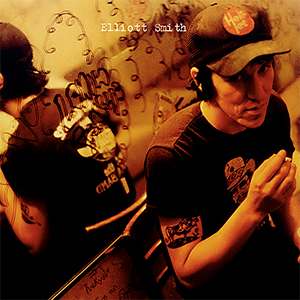
“Either/Or” by Elliott Smith (Album #20-25).
Released: Feb. 25, 1997
Produced by Elliott Smith, Tom Rothrock and Rob Schnapf
The early death of a famous person seems to immediately distort our memory of them. We remember James Dean– blond, delicate, dead from an auto accident–as a tragedy of mid century Southern California (James Byron Dean was born and raised in Marion, indiana). We think we remember Johnathan Larson, composer of the musical “Rent” dying from AIDS (misdiagnosed heart condition at age 35) or Amy Weinhouse from a terribly sad (and vague) combination of drugs, bad relationships and mental illness (alcohol poisoning. That’s all). And we remember the 2003 suicide of Elliot Smith’s as the violent manifestation of the morose, tragic quality of his music, a bard of pain, especially his.
I certainly did. And as we often do in these, I and we missed the point. But Elliott Smith’s music was a lot more than a catalog of his demons. I wish I had given it a chance to be.
“Either/Or” is Smith’s 3rd of 6 albums he completed in his lifetime and considered the turning point, where he went from writing from deep in the blankets of his emotions to walking out into the setting sun and embracing his many influences–60s folk, Beatles Pop, delicate wandering mistral sounds, after midnight jazz. It is unmistakably the Elliott Smith you know even if you don’t–wounded and singing through it–and a map of what is to come, Elliott Smith composing a rainbow of music from a limited color palette of feeling. It’s clear, just from here, that Elliott Smith saw his own project as much bigger than we did (I usually call this the Tina Turner Effect. Anna May Bullock of Nutbush, Tennessee said “I am a stadium artist and not just one half of a duo” upon going solo and was right. She saw the Tina Turner Project as bigger than we ever could. We had to catch up) and even though we only got some of it before he was gone, “Either/Or” is the glimpse through the clouds at a new dawn.
Usually at this point, I go through 3-5 songs on the record, telling you what I thought worked and didn’t, providing evidence for the larger conclusions where I began. I’m not going to do that this time around. Not because I don’t think you deserve it but in the case of this record and this artist, I think its focus is misplaced, grains of sand over the outlines of castles:
I was wrong about this artist. As I expected to be and have been many times over the course of this project. But that’s not just the topic sentence point here. That’s the aim of this entire project. I thought Elliot Smith was one note and the note wasn’t for me. He contains multiple variations of that note. Which may not be an approach I use in my own work or even prefer as a listener. But it is a fascinating, brilliant approach nonetheless. And I am at the very beginning of appreciating it.
So I am not going to weigh down my experience with “Either/Or” with either/ors. Let me say instead that I am grateful I found it and lucky I found it at the beginning of my research into his worth. If I had met Elliott Smith via his first album or extended laps with the Good Will Hunting and Royal Tenenbaums soundtracks (where I am in the minority thinking his music is misused twice, first as too of-the-moment for a movie that is, at bottom, Ordinary People set in working class Boston and second as too same-same as everything else on the soundtrack and not in a good way like Rushmore), I would have turned around and gone home. Sadness, musically, and for me anyway, must come with wisdom accrued and hard lessons traversed, your Leonard Cohens, your Nina Simones. Morose singers under 30 make me wanna say “Stop wasting time! You’ve got so much of it left to change things around!”
Elliott Smith did not give himself that time. And unfairly, neither did I. This record was my hard lesson. I hope the remaining 5 of Mr. Smith’s will be my accrued wisdom instead of the distorted conclusion I had lept to long before he was gone.
Hits/Misses
NA/NA.
Up Next: “The Boy with the Arab Strap” by Belle and Sebastian.